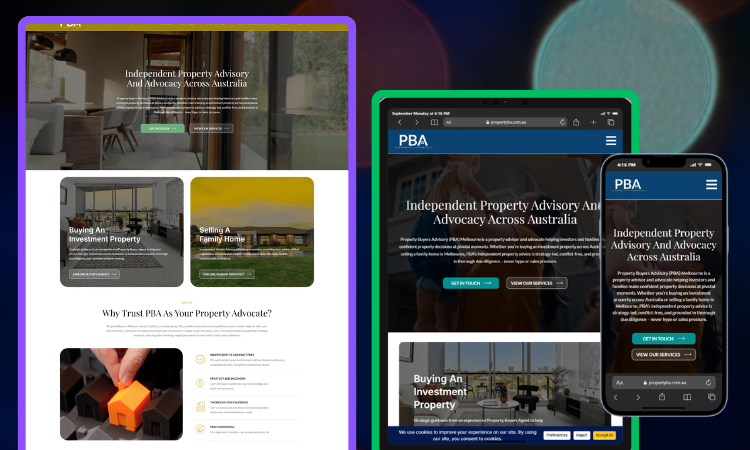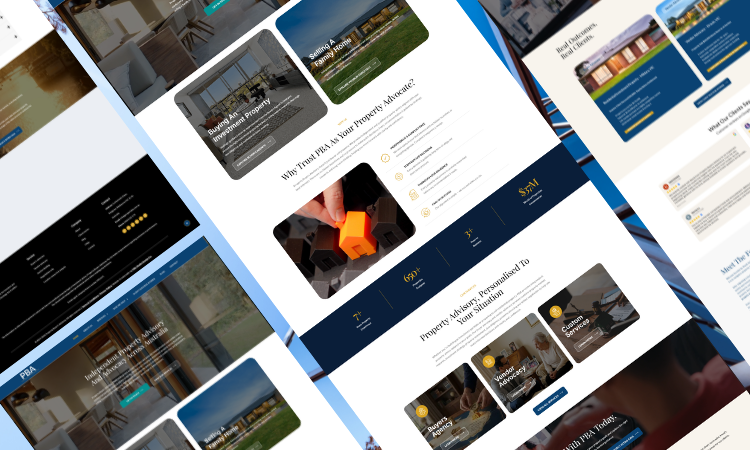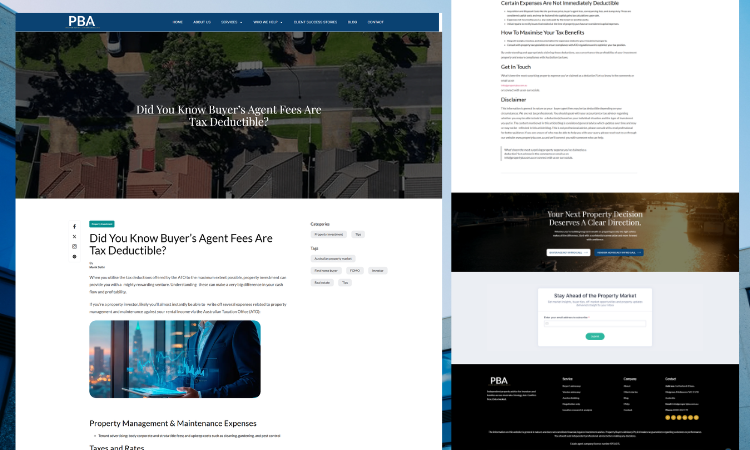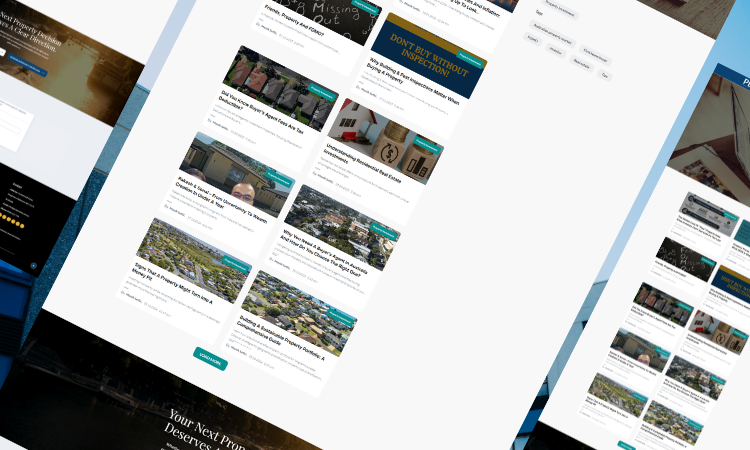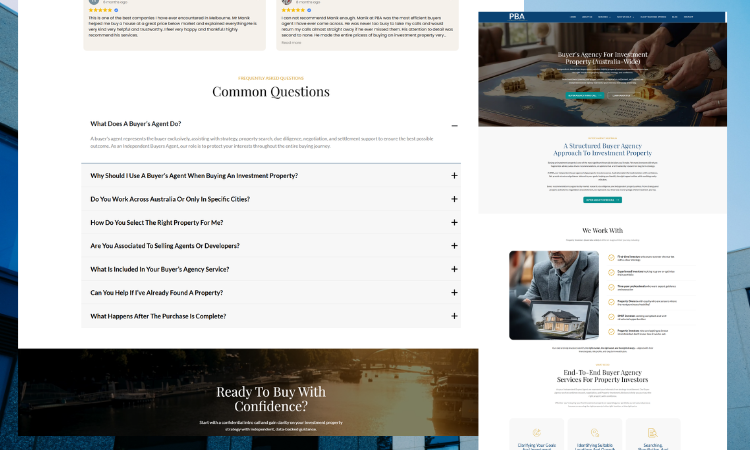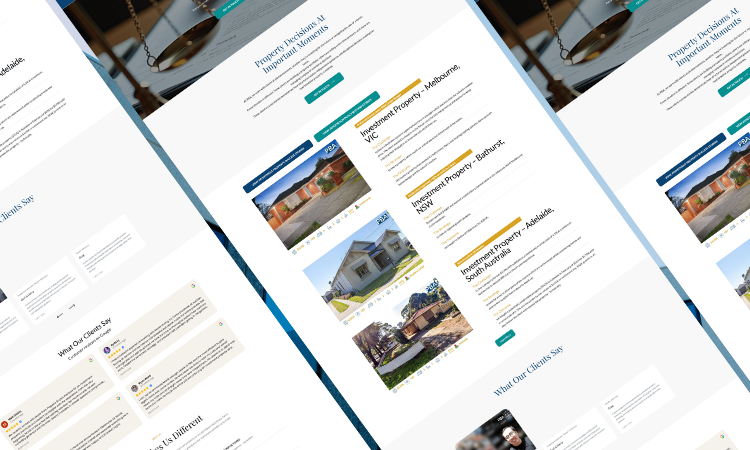
I converted the approved Figma designs into a responsive WordPress website using Elementor, working in collaboration with Fifth Studio Design. My work included Elementor development, responsive adjustments, custom CSS and JavaScript, speed optimisation, on-page SEO and technical SEO.
WordPress
Elementor Pro
Figma to Elementor
JetEngine
Custom CSS
JavaScript
Responsive Development
Performance Optimisation
On-Page SEO
WP Rocket
Dynamic Content
Custom WordPress Development
Website Optimisation
SEO-Friendly Development
WordPress
Elementor Pro
Figma to Elementor
JetEngine
Custom CSS
JavaScript
Responsive Development
Performance Optimisation
On-Page SEO
WP Rocket
Dynamic Content
Custom WordPress Development
Website Optimisation
SEO-Friendly Development
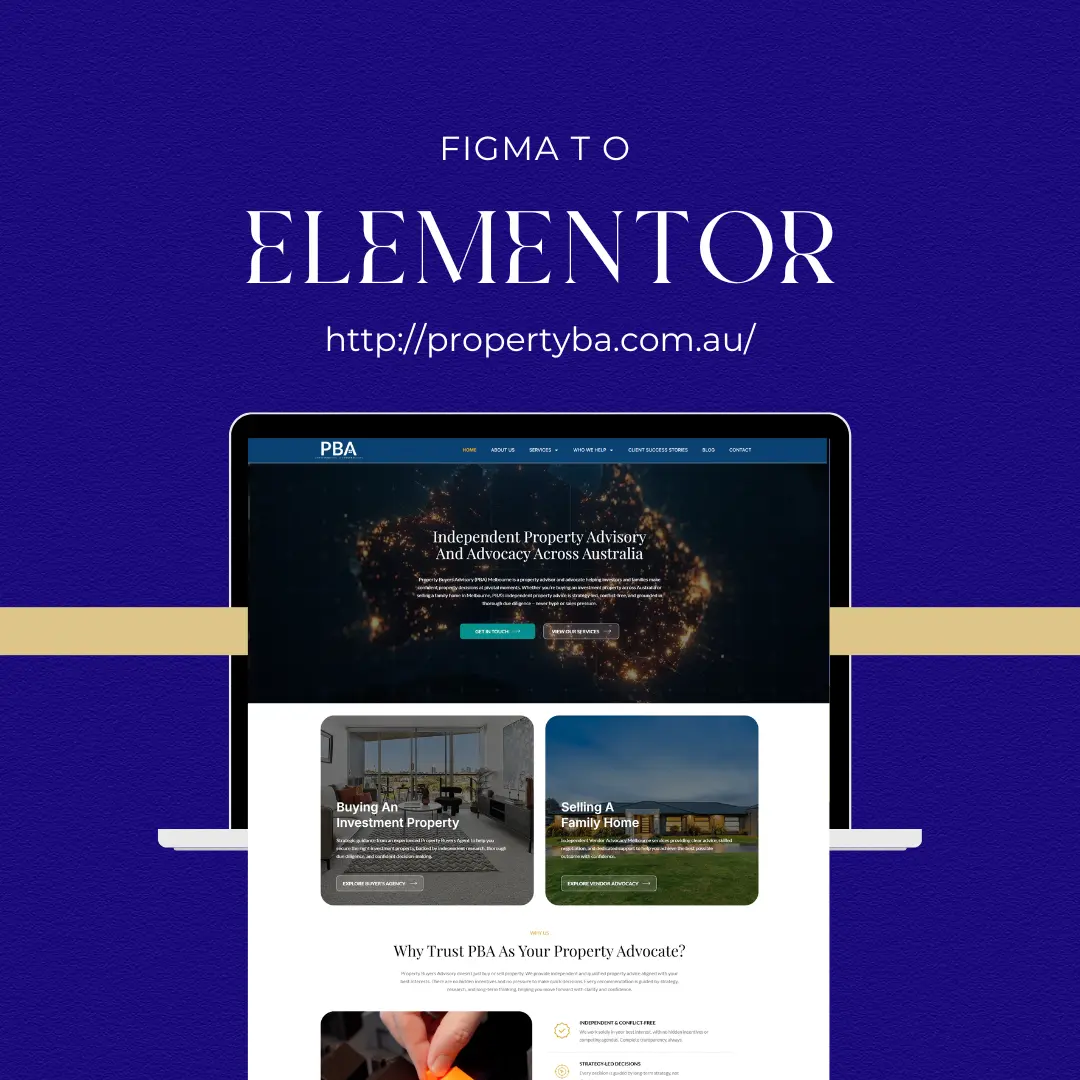
This project started with an approved Figma design for an Australian property advisory business.
I worked on the project as a WordPress Developer in collaboration with Fifth Studio Design. My main responsibility was converting the Figma layouts into Elementor and making sure the pages worked properly across desktop, tablet and mobile.
I also worked on custom CSS and JavaScript where needed, along with WordPress speed optimisation, on-page SEO and technical SEO.
The website includes service pages, client success stories, blog content and enquiry sections, so the WordPress setup also needed to be easy to manage and extend.
The website was built for an Australian property advisory business that works with property investors, families and property sellers.
The supplied Figma design included multiple service and content sections that needed to be recreated in WordPress without losing the original layout and visual structure.
The main development work was focused on converting the Figma design into Elementor and then adjusting the layouts for different screen sizes.
The main part of my work was converting the approved Figma layouts into Elementor.
I recreated the individual sections in Elementor and matched the main design details, including typography, spacing, content structure, buttons, images and section layouts.
After the desktop version was built, I adjusted the pages for tablet and mobile. Some sections needed different spacing, font sizes, alignment and layout behaviour at smaller screen sizes.
Custom CSS was used for design details that could not be handled cleanly through Elementor's normal controls. Custom JavaScript was also added where specific frontend behaviour was required.
I also worked on the website's speed and frontend performance during the development process.
WP Rocket was used for caching and performance settings. I reviewed the website setup and frontend resources to help reduce unnecessary loading and keep the pages working efficiently.
The optimisation was done without removing the design elements or functionality required for the website.
SEO work was included as part of the website development.
Rank Math SEO was used for the site's SEO setup. I worked on the page structure, heading hierarchy, metadata and other on-page SEO requirements.
The website structure was also organised around its main services and supporting content, helping create a clear structure for topics related to property advisory, property investment, buyers advocacy and vendor advocacy in Australia.
The goal was to keep the content and page structure useful for visitors while giving search engines clear information about each page.
The Figma design was created as the starting point, but the final website needed to work across real devices and screen sizes.
I adjusted the Elementor layouts for desktop, tablet and mobile, including typography, spacing, buttons, images, navigation and section layouts.
Some sections required separate responsive adjustments instead of simply reducing the desktop layout. Custom CSS was used where Elementor's responsive controls did not provide enough control.
The approved Figma design was converted into a responsive Elementor website and prepared for ongoing use in WordPress.
The finished website includes the required service pages, content sections, enquiry functionality and supporting content areas.
Along with the Figma to Elementor development, I completed responsive adjustments, custom CSS and JavaScript work, speed optimisation, on-page SEO and technical SEO.
The WordPress setup also gives the website room for additional services, blog posts, client success stories and other content in the future.
| Technology | Purpose |
|---|---|
| Figma | Used as the design reference for the WordPress and Elementor implementation. |
| WordPress | Used as the content management system for the website. |
| Elementor | Used to convert the Figma layouts into working WordPress pages. |
| JetEngine | Used for dynamic content and structured content requirements. |
| WP Rocket | Used for caching and website speed optimisation. |
| Rank Math SEO | Used for on-page SEO and technical SEO requirements. |
| Custom CSS | Used for design details and responsive adjustments that required additional styling. |
| Custom JavaScript | Used for specific frontend behaviour and interactions. |
| Google reCAPTCHA | Used to help protect website forms from automated spam submissions. |
| SMTP | Configured to support reliable email delivery from website forms. |
| Zoho CRM | Connected to the website enquiry workflow for lead and contact management. |
A closer look at the design, details, and responsive experience crafted for the project.
Clear answers to the key questions around the project, process, and final experience.
The approved Figma design was converted into WordPress using Elementor. I recreated the main page sections, typography, spacing, imagery, buttons and content layouts, then refined the pages for desktop, tablet and mobile.
The Figma layouts were implemented in Elementor with separate content and page sections for the website's property advisory services. The structure was kept flexible so service information, client success stories and other content could be managed and updated within WordPress.
The Elementor pages were checked across desktop, tablet and mobile screen sizes. I adjusted typography, spacing, image sizing, buttons, navigation and section layouts where required. Custom CSS was also used for responsive details that needed additional control.
WP Rocket was configured as part of the website development to handle caching and performance settings. I also reviewed the frontend setup and resources to help the Elementor pages load efficiently while keeping the required design and functionality.
Rank Math SEO was used for the website's SEO setup. I worked on the page structure, heading hierarchy, metadata, on-page SEO and technical SEO. The service and content structure was also organised around the website's property advisory topics and services.
Along with the Figma to Elementor development, the project included JetEngine for dynamic content, custom CSS and JavaScript, Google reCAPTCHA for form protection, SMTP for website email delivery and a Zoho CRM connection for handling enquiries. I worked across these areas as part of the WordPress development in collaboration with Fifth Studio Design.
Yes. I can work directly with designers, agencies or internal teams. In this project, Fifth Studio Design provided the approved Figma designs while I handled the WordPress and Elementor development, creating a clear handoff between design and development.
I typically need the approved Figma designs, WordPress or hosting access, final content and images, and details of any required functionality or integrations. Having these available before development helps keep the implementation organised and reduces unnecessary revisions.